






Car manuals are crafted for both new and seasoned drivers, aiming to bridge knowledge gaps and ensure safe, effective vehicle operation.
Why Car Manuals Are Often Overlooked
Despite being vital resources, car manuals frequently get neglected due to a perception of complexity and length. Many drivers, particularly those experienced with vehicles, assume existing knowledge suffices, dismissing the need for detailed reading.
Furthermore, the arrival of new vehicle models with increasingly sophisticated technologies contributes to this oversight. Owners may postpone reviewing the manual, hoping to learn features through trial and error. Audi Spain even acknowledged this, creatively merging manuals with short stories to encourage readership!
Ultimately, the sheer volume of information, coupled with a belief in intuitive operation, leads to car manuals often remaining unread, despite their crucial role in safety and optimal vehicle performance.
The Core Purpose of a Car Manual
The fundamental purpose of a car manual is to empower users – both customers and employees – with the knowledge needed for safe and effective vehicle operation and maintenance. It serves as a comprehensive guide, explaining processes, teaching skills, and ultimately, solving potential problems.
Manuals detail everything from basic vehicle systems to advanced technologies like Honda’s eCVT, ensuring drivers understand their car’s capabilities. They also outline crucial safety information, including emergency procedures and recommended service intervals.
Essentially, the manual aims to maximize the user experience, promoting responsible ownership and minimizing risks associated with unfamiliar features or potential mechanical issues.

Defining the Primary Audience: New Car Owners
New car owners, especially first-time drivers, are the core audience, needing guidance on vehicle operation, basic systems, and safe driving practices.
First-Time Drivers and Vehicle Operation
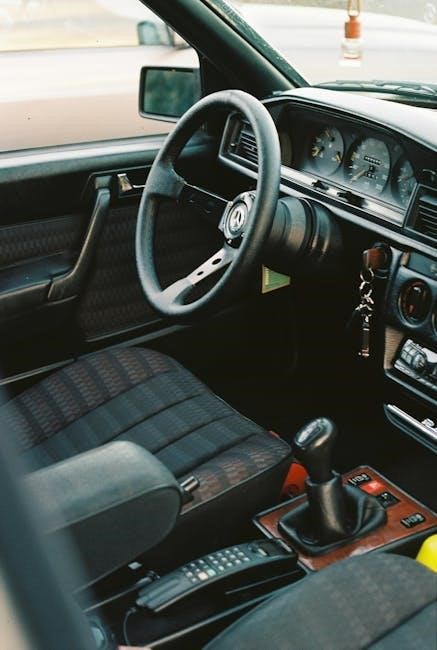
For novice drivers, a car manual serves as a foundational guide to understanding the complexities of vehicle operation. It demystifies controls, explains dashboard indicators, and outlines fundamental driving techniques. The manual addresses the initial learning curve, offering step-by-step instructions for starting, stopping, steering, and utilizing essential features. It’s crucial for building confidence and competence behind the wheel.
Furthermore, the manual introduces basic vehicle systems – from the braking system to the steering mechanism – in an accessible manner. It emphasizes safe operation guidelines, including proper seat adjustment, mirror positioning, and the importance of adhering to traffic laws. Early guidance helps establish good driving habits and minimizes the risk of accidents, ensuring a positive and secure driving experience.
Understanding Basic Vehicle Systems
The car manual caters to all drivers, regardless of experience, by providing detailed explanations of core vehicle systems. It breaks down complex mechanics – like the engine, transmission, and electrical components – into understandable terms. This knowledge empowers owners to recognize potential issues and communicate effectively with mechanics.
For those unfamiliar with automotive technology, the manual clarifies the function of each system and its impact on vehicle performance. It explains how systems interact, fostering a deeper understanding of the car’s overall operation. This isn’t just about fixing problems; it’s about preventative maintenance and informed decision-making, ultimately extending the vehicle’s lifespan and ensuring a safer driving experience.

The Secondary Audience: Experienced Drivers & New Vehicle Models
Even seasoned drivers benefit from manuals when upgrading to new models, as they detail updated technologies and model-specific features for optimal use.
Adapting to New Technologies
Modern vehicles are increasingly equipped with sophisticated technologies, demanding that car manuals cater to drivers needing guidance on these advancements. The manual serves as a crucial resource for understanding features like advanced driver-assistance systems (ADAS), infotainment systems, and hybrid/electric vehicle components. Experienced drivers, accustomed to traditional mechanics, require clear explanations to effectively utilize these innovations.
The manual’s role extends beyond simply listing features; it must detail how these technologies enhance safety and performance. For example, understanding an eCVT system, as seen in models like the Honda Prelude, requires a departure from traditional gear-shifting expectations. A well-written manual empowers drivers to confidently adapt, maximizing the benefits of their vehicle’s capabilities and ensuring a safe driving experience.
Model-Specific Features and Updates
Car manuals are meticulously tailored for each vehicle model, recognizing that features and functionalities vary significantly between manufacturers and even within a brand’s lineup. This targeted approach ensures drivers receive precise information relevant to their specific car, avoiding confusion caused by generalized instructions.
Updates and revisions are crucial; manuals must reflect changes introduced in new model years, addressing enhancements or modifications to existing systems. For example, a sporty coupe like the Honda Prelude demands a manual that acknowledges driver engagement expectations and thoroughly explains advanced systems; The audience – the car’s owner – relies on this documentation to fully understand and utilize the unique characteristics of their vehicle, maximizing its potential and ensuring optimal performance.

Considering the Audience’s Technical Proficiency
Manuals cater to diverse automotive knowledge levels, from beginners to experts, striving for clarity and avoiding excessive jargon for all users.
Catering to Varying Levels of Automotive Knowledge
Recognizing that car owners possess vastly different levels of automotive expertise is paramount when crafting a user manual. Some individuals may be entirely new to vehicle operation, requiring explanations of even the most basic systems. Others, particularly experienced drivers, might only need clarification on model-specific features or new technologies.
A successful manual avoids assuming prior knowledge, instead progressively building understanding. It should define key terms and concepts clearly, steering clear of overly technical language that could alienate less experienced users. Simultaneously, it must provide sufficient detail to satisfy those with a deeper understanding, without being condescending.
The ideal approach involves layering information – offering simplified explanations alongside more in-depth technical details for those who seek them. This ensures the manual remains accessible and valuable to the broadest possible audience.
Avoiding Jargon and Technical Overload
Car manuals are frequently criticized for their dense, technical language, creating a barrier for many owners. To effectively reach a diverse audience, minimizing jargon and technical overload is crucial. While accuracy is important, prioritizing clarity and simplicity ensures broader comprehension.
Explanations should be presented in plain language, avoiding industry-specific terms whenever possible. When technical terms are unavoidable, they must be clearly defined, ideally with accompanying visuals. The goal is to empower all owners, regardless of their automotive background, to understand their vehicle’s operation and maintenance.
Remember, the manual’s purpose is to inform and assist, not to impress with technical complexity. A user-friendly approach fosters confidence and encourages responsible vehicle ownership.

Safety Information: A Critical Component for All Users
Safety sections within car manuals are vital for all drivers, detailing emergency procedures and safe operation guidelines for every user.
Emergency Procedures and Warnings
This crucial section of the car manual is designed for every driver, regardless of experience level. It’s written assuming users may face unexpected situations requiring immediate action.
The manual clearly outlines steps for handling breakdowns, accidents, and other roadside emergencies, prioritizing user safety. Warnings are prominently displayed, alerting drivers to potential hazards and preventative measures;
These instructions are crafted to be universally understood, even under stress, and cater to those unfamiliar with specific vehicle systems. The goal is to empower all users with the knowledge to respond effectively and minimize risk in critical moments, ensuring both driver and passenger well-being.
Safe Operation Guidelines
These guidelines are written for all drivers, from novices to veterans, emphasizing responsible vehicle handling for optimal safety. The manual assumes a range of driving skills and aims to reinforce best practices.
Information covers topics like proper seating position, steering techniques, and maintaining safe following distances, catering to those needing reminders or initial instruction. Warnings about distracted driving and adverse weather conditions are included, targeting all users.
The goal is to promote a proactive safety mindset, ensuring every driver understands how to operate the vehicle predictably and avoid potential accidents, regardless of their prior experience.

Maintenance Schedules: Targeting Responsible Owners
These schedules are designed for owners committed to vehicle longevity, detailing service intervals and procedures to maintain optimal performance and reliability.
Understanding Recommended Service Intervals
The car manual meticulously outlines recommended service intervals, catering to responsible owners who prioritize preventative maintenance. These intervals aren’t arbitrary; they’re based on extensive engineering data and testing, ensuring components function optimally and safely over the vehicle’s lifespan. The manual clarifies when to change fluids (oil, coolant, brake fluid), replace filters (air, fuel, cabin), inspect critical systems (brakes, suspension, steering), and perform other essential tasks.
Understanding these schedules empowers owners to proactively address potential issues before they escalate into costly repairs. Ignoring these recommendations can void warranties and compromise vehicle safety. The manual’s clarity helps owners differentiate between “must-do” services and those that are recommended based on driving conditions or mileage, ultimately fostering a long-term, reliable relationship with their vehicle.
DIY Maintenance vs. Professional Service
The car manual acknowledges a spectrum of owner capabilities, guiding those comfortable with basic maintenance while clearly defining tasks best left to professionals. It details simple checks – fluid levels, tire pressure, light bulb replacement – suitable for DIY enthusiasts. However, it also emphasizes the complexity of systems like brakes, airbags, and engine diagnostics, strongly recommending certified technicians for these.
The manual isn’t discouraging DIY work; it’s promoting safety and preventing unintended damage. It helps owners assess their skill level honestly and understand the potential risks of attempting repairs beyond their expertise. Ultimately, the manual serves as a resource for informed decision-making, balancing cost savings with professional assurance and vehicle integrity.

Troubleshooting Guides: Assisting All Skill Levels
Manuals cater to everyone, offering simple solutions for common issues and guiding all drivers to seek professional help when needed for complex problems.
Common Issues and Simple Solutions
Car manuals are designed to empower owners facing everyday vehicle challenges, regardless of their mechanical expertise. They address frequently encountered problems, like a dead battery requiring a jump start, or identifying warning light meanings.
These guides provide step-by-step instructions for simple fixes – checking fluid levels, replacing a burnt-out bulb, or resetting basic systems. The intention is to offer accessible solutions, preventing unnecessary trips to the mechanic for minor issues.
However, manuals also clearly delineate when a problem exceeds a driver’s capabilities, emphasizing the importance of professional diagnosis and repair for more complex concerns.
When to Seek Professional Help
Car manuals are written acknowledging that owners possess varying levels of automotive knowledge and skill. They proactively identify situations demanding a qualified technician’s intervention. This includes any issue involving the braking system, steering, or safety features – areas where compromise can be dangerous.
The manual guides users to seek professional assistance when encountering complex diagnostic codes, persistent warning lights, or problems beyond the scope of simple troubleshooting.
It emphasizes that attempting repairs without proper training or tools can exacerbate the issue and potentially void warranties, reinforcing the value of expert diagnosis and repair.

The Role of Visual Aids in Audience Comprehension
Manuals cater to diverse learning styles, utilizing diagrams and illustrations to clarify complex systems for all users, regardless of technical expertise.
Diagrams, Illustrations, and Charts
Effective car manuals recognize that not all users grasp information solely through text. Therefore, incorporating visual aids like detailed diagrams, clear illustrations, and informative charts becomes paramount. These elements transcend language barriers and cater to visual learners, enhancing comprehension of intricate vehicle systems.
For new drivers, a visual representation of engine components or the location of essential controls can be significantly more helpful than a lengthy description. Similarly, experienced drivers encountering new technologies in updated models benefit from visual breakdowns of these features. Charts illustrating maintenance schedules or troubleshooting steps provide a quick and accessible reference point.
Ultimately, the strategic use of visuals ensures the manual is inclusive and accessible to a broad audience, fostering a deeper understanding of the vehicle and promoting safe operation.
Enhancing Understanding for Visual Learners
Recognizing that a significant portion of the audience learns best through visual means is crucial. Car manuals must prioritize imagery to effectively convey complex information to these individuals. Diagrams detailing system layouts, illustrations showcasing component interactions, and charts outlining procedures become essential tools for comprehension.
For those less comfortable with technical jargon, a visual guide can bypass linguistic barriers, offering a more intuitive understanding of vehicle operation and maintenance. This is particularly important for new drivers or those adapting to new vehicle models with unfamiliar features.
By catering to visual learners, manuals become more inclusive and empower a wider range of users to confidently interact with their vehicles.

Manuals for Specific Vehicle Types (Sports Cars)
Sports car manuals target drivers seeking engagement, detailing advanced systems like eCVT, and catering to those expecting a premium, performance-focused experience.
Addressing Driver Engagement Expectations
For sports car enthusiasts, the owner’s manual isn’t merely an instruction guide; it’s a companion to a passionate driving experience. These manuals are specifically written for individuals who actively seek a connection with their vehicle, desiring a deep understanding of its capabilities; Recognizing the traditional expectation of a manual gearbox – even in models like the Honda Prelude adopting eCVT – the manual must acknowledge this preference.
It needs to explain how the eCVT functions, emphasizing the performance benefits and driver-focused tuning, rather than simply stating its mechanical operation. The audience expects detailed explanations of advanced systems, and the manual should deliver, fostering a sense of control and informed engagement. Ultimately, it’s written for those who want to feel the car, not just operate it.
Explaining Advanced Systems (eCVT)
This section of the manual is written for drivers encountering continuously variable transmissions (eCVTs) for the first time, or those unfamiliar with their operation compared to traditional gearboxes. It acknowledges that enthusiasts often anticipate a conventional shifting experience, and directly addresses the absence of discrete gears. The manual’s purpose is to demystify the eCVT, explaining its function – a system without a traditional transmission – in accessible terms.
It’s geared towards building understanding, not just listing components. The explanation should focus on how the eCVT optimizes engine performance and delivers a smooth, responsive driving experience. It’s written for those seeking to comprehend the technology, and appreciate its benefits, even if it deviates from their expectations.